

On open sand, use low water to identify gullies and banks. The flooding tide often brings fish into those features and closer to the beach.
Scyliorhinus canicula
Identification, season, habitat, bait, rigs and TideDeck shore marks relevant to Lesser-spotted dogfish.
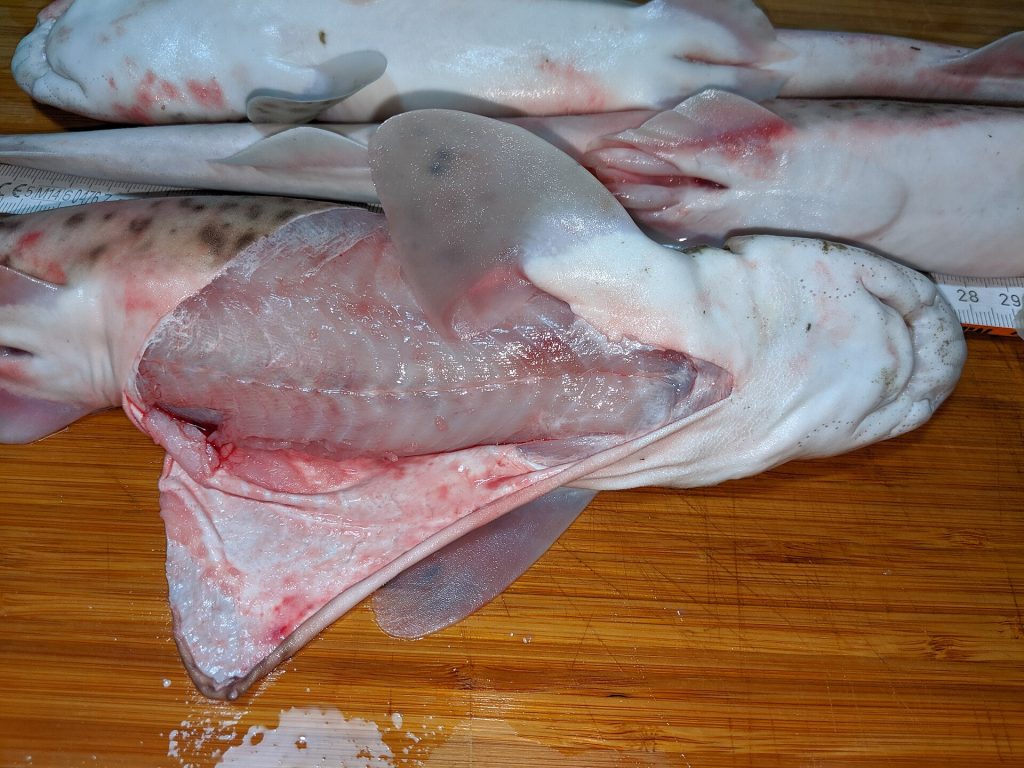
Small slender shark covered with numerous dark spots and blotches.
Sand, shingle, rock and mixed ground.
Very widespread around UK coasts.
Broad UK context, not confirmation of presence at every compatible mark.
Frequently encountered after dark but may be caught at any time.
Normal bottom-fishing tackle is generally adequate; tough baits and secure hook placement help.
Compare identification features with:
Lesser-spotted dogfish is a UK shore-angling target associated with sand, shingle, rock, mixed. Widespread and tolerant of many ground types; fish baits after dark are dependable.
Typical UK shore season: All year. Timing varies around the UK with water temperature, region and weather, so treat the season as a planning range rather than a promise.
Useful ground types include sand, shingle, rock, mixed. Fish position within a mark can change with tide stage, daylight, swell and food availability.
Common baits: mackerel, squid, sandeel.
Common rigs or methods: pulley rig, flapper.
Use the linked TideDeck bait, rig, month and location pages to build a session plan. Check current local rules and recent reports before travelling, especially where species availability or conservation measures can change.
Broad UK shore-fishing guidance; regional timing and water temperature can shift availability.
These are ground-type principles, not mark-specific claims. Use the live TideDeck page for the mark you plan to fish.
On open sand, use low water to identify gullies and banks. The flooding tide often brings fish into those features and closer to the beach.
Steep shingle often gives useful depth close in. Fish the moving water around high tide, but adjust lead choice to the strength of the run.
Rock marks can fish at several tide stages, but safe access is the first constraint. Note escape routes before the flood and expect stronger tackle around snags.
Mixed ground rewards finding the boundary between clean sand and rougher structure. Moving water across that edge can concentrate food and fish.
Ground-type matches for planning and research, not confirmed catches or a claim that the species will be present.